
Understanding & Managing Bias in Expert Forensic Judgment
for professionals in behavioral health, psychologists, counselors, social workers, & criminal justice
Presented by Dr. Tess Neal
Archived Web Content Notice
This webpage and its contents are archived and maintained for historical, research, or recordkeeping purposes only. It is not actively updated and may not comply with current accessibility standards. If you need an accessible version of this webpage or its contents, please contact Joseph Ciarmataro (University of Nebraska Public Policy Center) via email at jciarmataro@nebraska.edu or call 402-472-5678.
Videos
The videos below include Part 1 and 2 of the training on "Understanding & Managing Bias in Expert Forensic Judgment" with Dr. Tess Neal.
Part 1:
Understanding & Managing Bias
in Expert Forensic Judgment
(Dr. Tess Neal)
Part 2:
Understanding & Managing Bias
in Expert Forensic Judgment
(Dr. Tess Neal)
Description:
This training explains the basic science of how and why human judgments are susceptible to various biases, with specific emphasis on expert judgments in forensic settings. A theoretical model, supported by empirical findings from the field, will clarify when and why experts are protected against, as well as when they are especially prone to bias. The implications across these findings for bias mitigation in clinical and professional practice settings will be discussed, as well as promising new directions for bias mitigation.
Date Presented: Mon., January 27, 2025, 8am – 12pm (Central)
Date Training Expires: January 27, 2027
Objectives:
- Name and define at least 3 common biases that affect expert decision processes and explain ways in which they may compromise the validity and reliability of forensically-related judgments.
- Describe a theoretical model that clarifies when and why experts are protected against and when they are especially prone to bias.
- Identify practical bias mitigation strategies or steps to reduce bias in forensic work.
- Describe how strategies borrowed from open science, forensic science, and judgment and decision making could be used to improve the rigor of and reduce bias in forensic judgments.
Supporting Material

About the Speaker
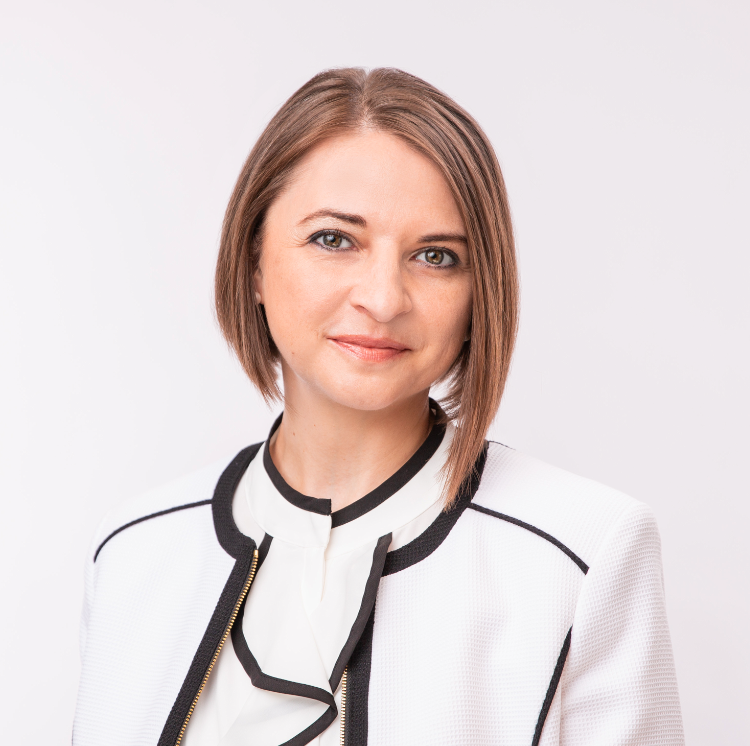
Dr. Tess Neal
PhD
Tess M.S. Neal is an associate professor and Dean’s Professor of Psychology at Iowa State University. She is a scientist, a licensed clinical psychologist, and a forensic psychologist. She studies the nature and limits of expertise. Her work has been funded by multiple grants from the National Science Foundation. She is a fellow of both the Association for Psychological Science and the American Psychological Association, and she is a Fulbright Scholar. She serves as Editor-in-Chief of the APA journal Psychology, Public Policy, and Law.